As a result of collective construction, we are delighted to share a fundamental milestone for the open agriculture community: Bioleft's Participatory Evaluation Protocol for Creole Tomatoes ((Collaborative Evaluation Protocol for Creole Tomatoes in Participatory Breeding Programs)is now available—an open, practical, and replicable methodological tool designed for participatory tomato breeding.
What is it and what is it for?
The protocol provides a structured yet flexible framework to coordinate decentralized trials of creole tomatoes. Its main purpose is the recovery, evaluation, circulation, and improvement of tomato diversity in agroecological production contexts, home gardens, and community projects.
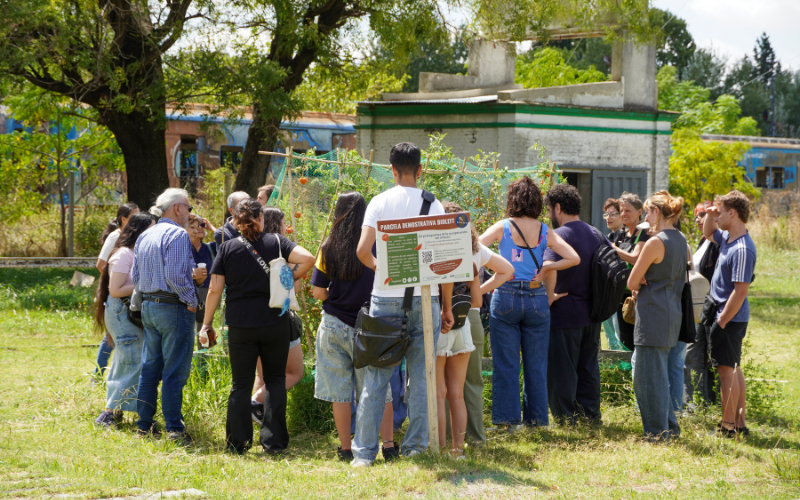
Through this design, the goal is to strengthen the autonomy of growers, providing tools so that seed communities can coordinate horizontal observation, care, documentation, and reflection processes across different regions and climatic conditions.
A living protocol: evolution and dynamism
This document is conceived as a living protocol and a shared agreement. The network commits to reviewing and updating it periodically every two years. In this way, future versions will actively incorporate accumulated learnings, community feedback, and methodological reflections arising from successive growing seasons.
The five stages of the participatory process
The protocol's methodology organizes the evaluation cycle into five interconnected phases that combine two fundamental dimensions: field agronomic evaluation and post-harvest sensory evaluation:
- Trial design and participant onboarding:Trial design and participant onboarding): Trial objectives are defined alongside participants, and the Target Product Profile (TPP) is co-designed, detailing the desired agronomic, culinary, and cultural characteristics for the variety.
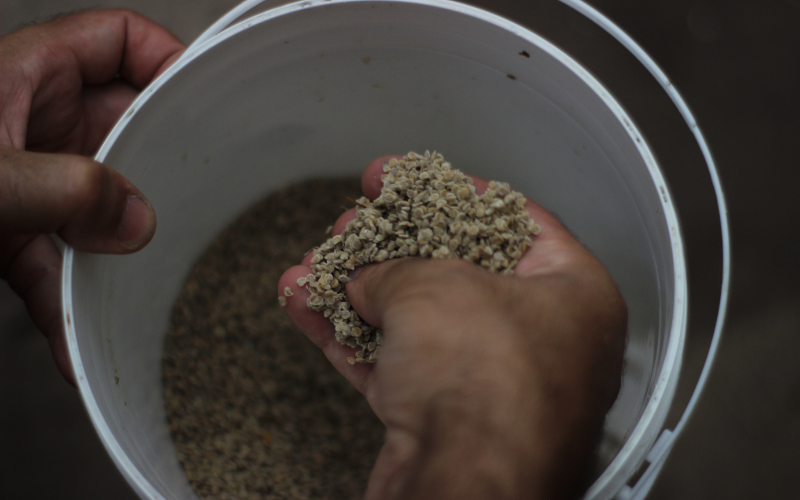
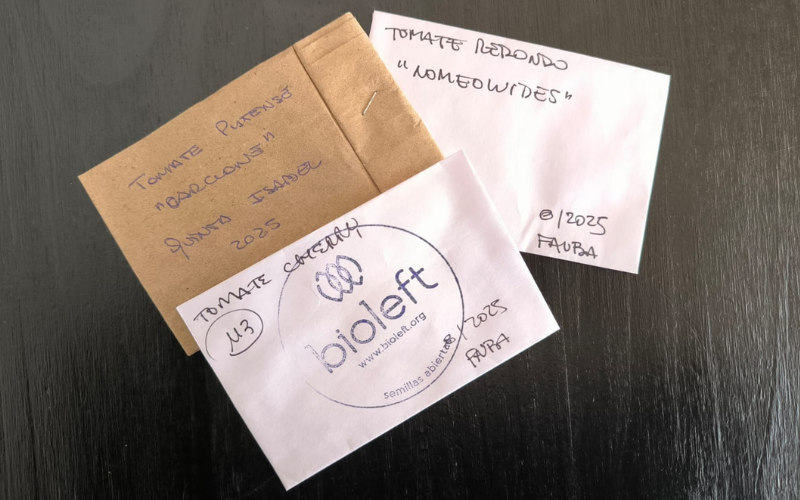
- Seed preparation and distribution: Three genetically distinct tomato accessions are selected using scientific criteria and community preferences. The exchange takes place under the ethical and legal framework of open-source seeds (Bioleft Agreement) to ensure that materials remain free for use, exchange, and future breeding.
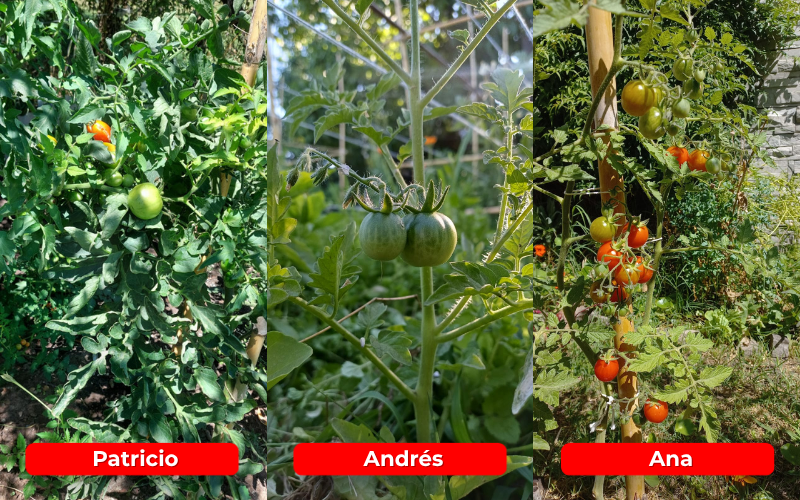
- Field observations during crop development: Growers record key data at specific phenological stages using a standardized template. Monitoring spans from sowing and emergence, through transplanting conditions (whether in soil or containers), to management practices (pruning, staking, watering) and plant responses to water or pest stress.
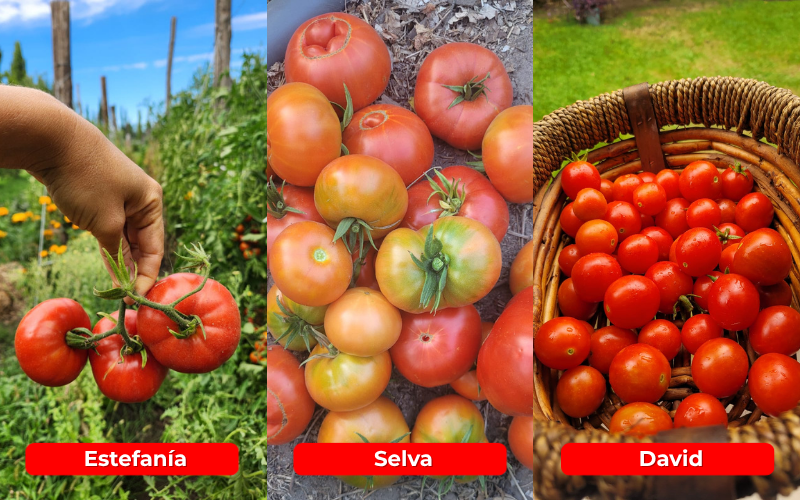
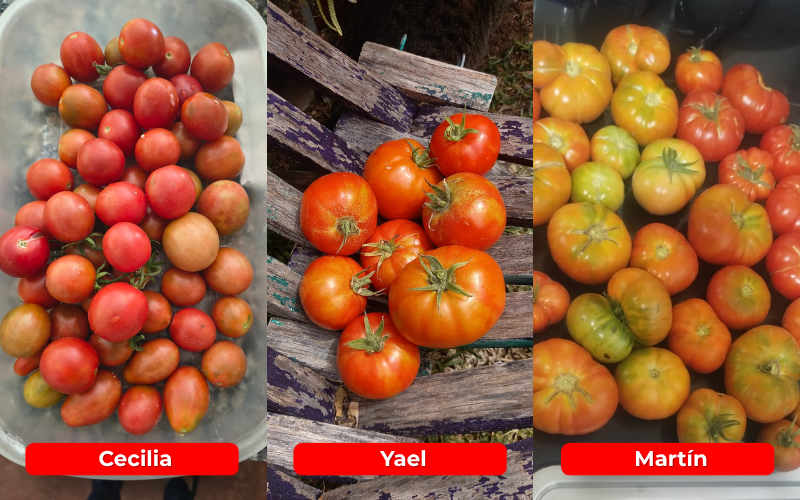
- Harvest, post-harvest, and sensory evaluation: Yield and fruit quality are recorded under real consumption conditions. In addition, a detailed sensory evaluation is promoted using a 9-point hedonic scale to score attributes such as flavor, acidity, juiciness, and aroma. This dimension is complemented, where feasible, by collective tasting events involving external consumers, chefs, and culinary spaces.
- Data consolidation and feedback:Feedback): At the end of the campaign, templates are consolidated into a centralized database to identify patterns. The cycle formally closes with a collective feedback workshop where results are interpreted together, transforming distributed observations into community knowledge and planning subsequent breeding steps.
Non-extractive ethics
The protocol adopts a citizen science approach where data robustness stems from connecting and comparing observations from multiple plots cultivated under their usual production conditions across diverse territories.
Likewise, the methodology is grounded in principles of respectful and non-extractive collaboration. This means that traditional knowledge, local practices, and culinary memories shared by the community are treated as situated contributions that require care, informed consent, attribution, and reciprocal benefit for the territory.
Next steps and how to collaborate
Currently, the protocol is published in English to engage with international networks of participatory research and agroecology. Nevertheless, recognizing the importance of local grounding, the technical team is working on editing the Spanish version to facilitate its direct adoption in our region.
We invite the entire collaborative network, allied organizations, and social economy spaces to explore the document on the platform, and we ask for your support in disseminating this material among colleagues and institutions interested in building sovereign, diverse, and collectively managed seed systems.
This publication was made possible thanks to the support of The Conservation, Food and Health Foundation and the UNSAM Investiga program..